
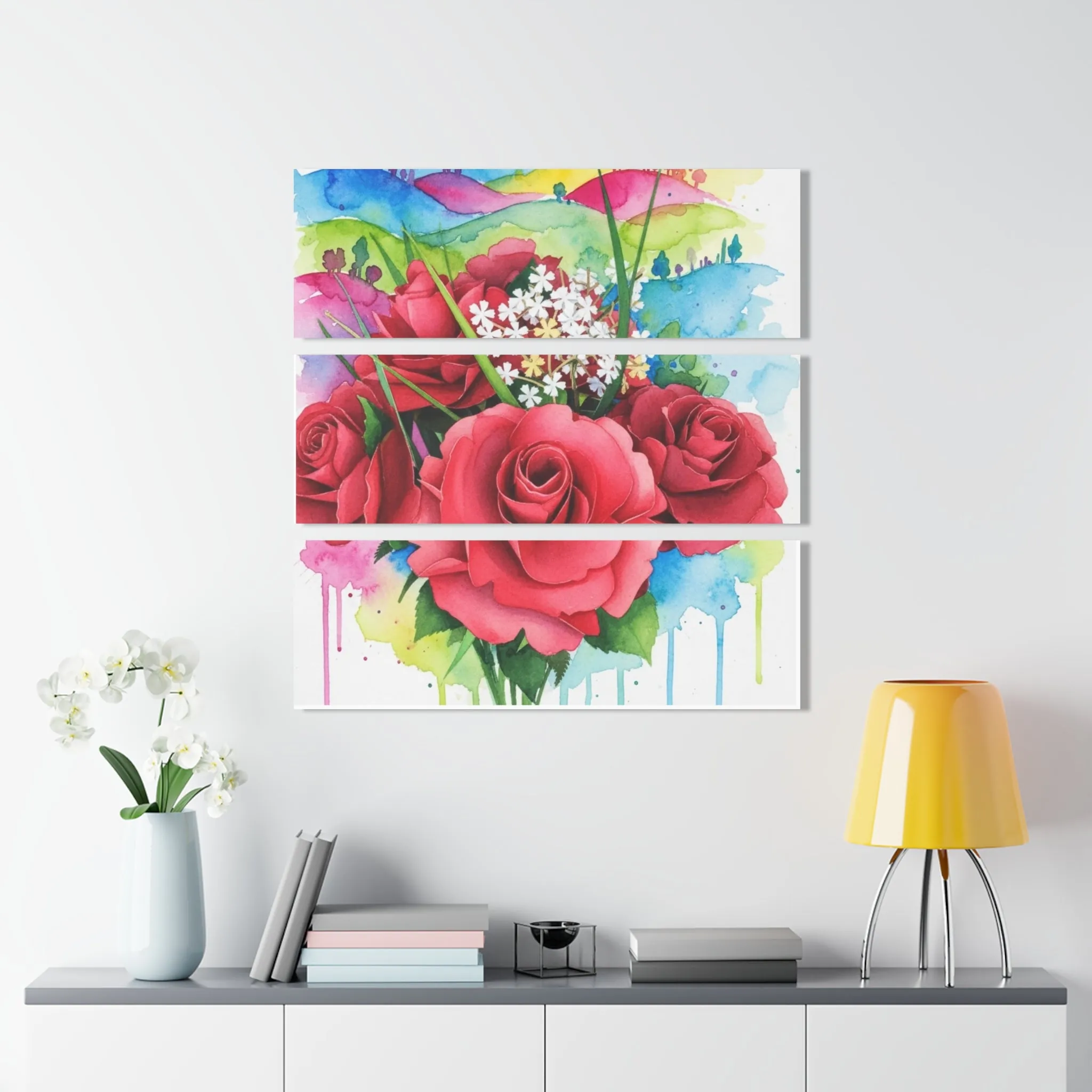
A botanical wall art set of 3 has a useful kind of confidence. It fills a meaningful stretch of wall, but the breaks between panels keep it from becoming one heavy block. Three related floral or botanical images can bring rhythm to a room that feels unfinished, whether they sit above a sofa, a dining sideboard, a bed, or a long console.
The important word is related. A trio should have a shared visual thread, then enough variation to reward a closer look. That may be one palette across three floral moments, a repeated stem shape, or a sequence that moves from light to dark. Use this guide to choose the scale, spacing, and color story that lets the group feel composed instead of merely multiplied.
Start with the wall’s job
Before you choose a botanical subject, decide what the wall needs to do. Above a sofa, a set of three can anchor the seating area and give a broad piece of furniture a clear center. In a dining room, it can bring a little softness to the wall that guests see while they sit and talk. Along an entry or hallway, it can create a measured sequence that makes the transition through the space feel less abrupt.
That job tells you whether the trio should feel quiet or expressive. A room with patterned upholstery, shelves, and many objects usually benefits from airy backgrounds and a restrained palette. A simpler room can take deeper color, larger blooms, or more distinct contrast. Botanical art is flexible because it brings organic shape, but it still needs to take its turn. Let one element lead the room instead of letting every surface ask for attention.
Look at the views you actually use. The doorway, the dining chair, and the sofa are more important than the spot directly in front of the wall. A grouping that looks slightly large up close can be exactly right from across the room. A grouping that looks delicate from one foot away can disappear when it is meant to hold a whole seating area together.
Think of three panels as one complete silhouette
The easiest mistake is to choose three nice pieces, then treat them as separate decisions. A successful set of three has one outer silhouette. Imagine a soft rectangle around all the panels together. That is the shape the room reads first, especially from across the space.
For a sofa, sideboard, or bed, a horizontal trio often works because it echoes the furniture’s width. For a tall narrow wall, a vertical sequence can use height without pressing against a doorway or window. A mixed arrangement can be beautiful, but it needs a clear centerline and consistent spacing so it still reads as a group. Painter’s tape is the simplest planning tool here. Mark the outer edges, then mark each panel and step back.
Do not feel obligated to fill every inch. The calm around the artwork is part of the composition. A trio needs enough blank wall on either side to register as a focal point. If the marked shape crowds a lamp, shelf, or door trim, reduce the scale or choose a different wall rather than forcing the arrangement into a space that cannot support it.
Choose a shared thread, not three copies
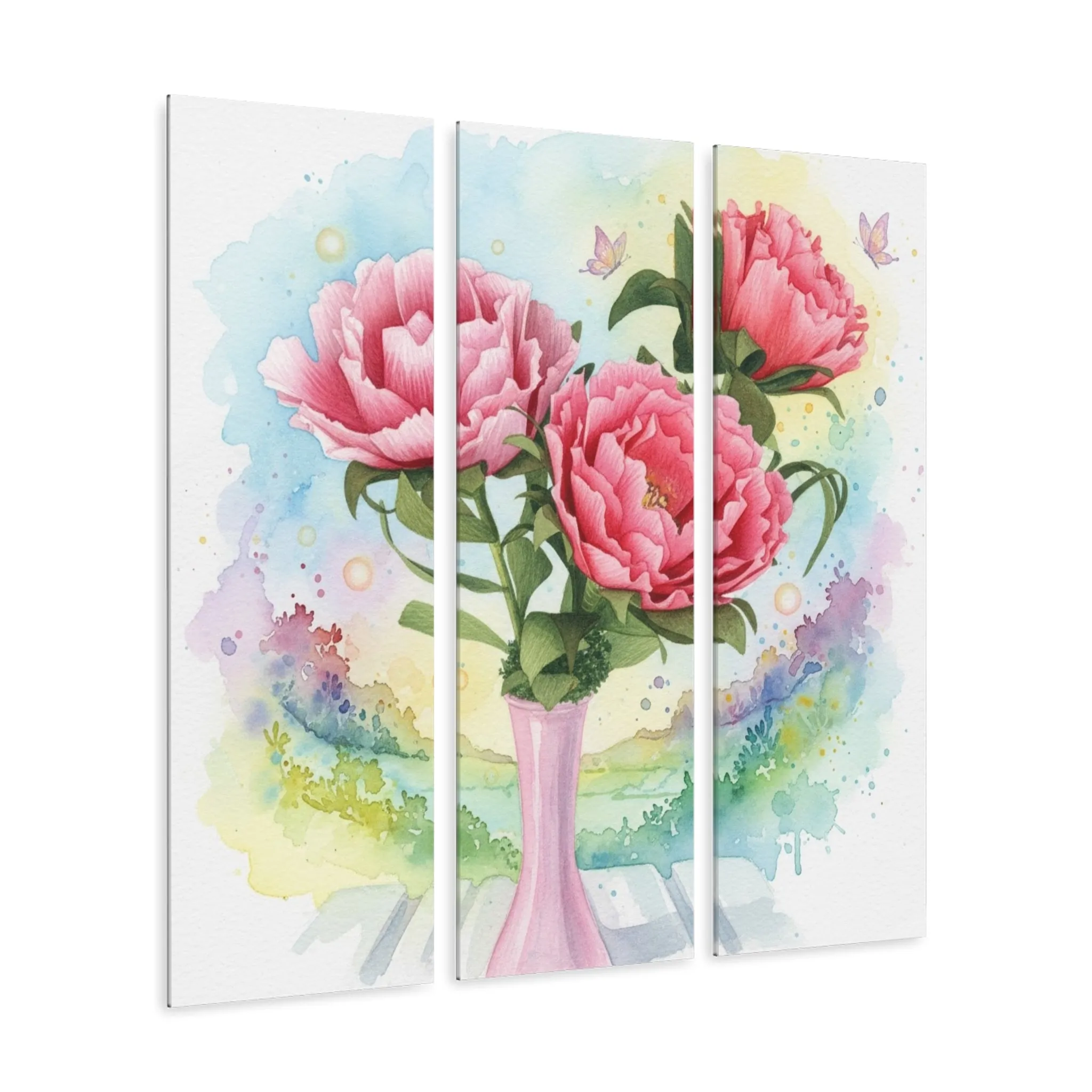
The best botanical trios have a family resemblance. They may share a field color, a brushy watercolor treatment, a flower type, or a warm and cool balance. That connection is what lets the eye travel across the group without having to solve three unrelated pictures.
They should not be exact repeats, though. Variation gives the grouping life. One panel might carry the strongest bloom, another might have more open space, and a third might introduce a darker leaf or background note. Think of the panels like a conversation. They belong together, but each should add something rather than repeating the same sentence three times.
Color is usually the clearest thread. Pick one or two tones already established in the room, such as warm white and honey wood, blush and muted green, or cream and charcoal. Then let the botanical art introduce a small amount of contrast. A deep rose center, a green stem, or a dark outline can give the trio definition without making it shout. If you are still deciding on the palette, the studio’s neutral floral wall art guide can help you judge undertones and visual contrast.
Let furniture set the scale
Use the furniture below the art as the reference point. A trio above a long console or sofa generally needs enough width to feel connected to it. When the artwork is much narrower than the furniture, the wall can feel pinched and the group can look like it was placed as an afterthought. When it is too wide, it can crowd the edges and make the furniture feel smaller.
There is no universal measurement because the room, ceiling height, frame treatment, and amount of negative space all matter. A practical approach is to mark the complete grouping with painter’s tape, then compare it to the furniture from the normal viewing distance. If the composition feels like it is floating high above the piece or lost in a large wall, adjust the outer shape before you think about details.
Scale also depends on the artwork’s visual weight. Pale, open watercolor panels can be a little larger without overwhelming the room. Dark, dense, or highly detailed panels can feel larger than their dimensions suggest. For a room that needs a stronger focal point, see the studio’s guide to large flower wall art. It offers another useful way to think about size before you order.

Keep the spacing consistent
Spacing is what turns three panels into a deliberate set. The gap should be even from panel to panel, and it should feel modest in relation to the artwork. If the gaps are too wide, the pieces drift apart. If they are too tight, they can look like one image that was accidentally split. A consistent narrow channel lets the wall show through and gives each panel its own presence.
Start by laying the pieces on the floor in their intended order. Measure the two gaps with the same object, such as a small piece of cardboard, rather than estimating by eye. Once the group is on the wall, check the top edges, bottom edges, and the overall centerline. Tiny differences are more visible in a repeated sequence than they are in a single frame.
Hang the group at a height that connects it to the furniture below. Art placed too high becomes a separate event near the ceiling. A trio above a console or headboard should feel like part of one visual zone. If you are building a larger arrangement around it, the studio’s floral gallery wall guide explains how to use one clear anchor before adding supporting pieces.
Make a hanging plan before the first hole
A few minutes of planning keeps a three-piece arrangement from turning into a patch-and-rehang project. Start by deciding the full outer width and height of the group, then find the center of that complete shape. Mark that center lightly with painter’s tape. From there, work outward so the middle panel or the center gap is aligned with the furniture below. The room reads the group as a whole, so centering one panel by itself can leave the finished arrangement subtly off-balance.
Lay each panel on the floor in its final left-to-right order before it goes up. This is the moment to test whether the darkest panel belongs in the middle, whether one composition feels too visually heavy beside another, or whether the color story needs to move from softer to stronger. Photograph the floor arrangement from standing height. That quick view is surprisingly useful because it reduces the images to the same kind of overall impression they will have from across the room.
When the trio is hung, do one final check from the entrance and from the seating area. Look for equal gaps, a steady top edge, and enough open space around the outside. Then leave it alone for a day before adding shelves, sconces, or more frames nearby. A botanical trio often needs less support than people expect. Letting it hold the wall on its own is usually what makes it feel calm and intentional.
Use finish and light to shape the mood
Botanical subject matter is naturally soft, but finish changes its personality. Canvas has a quieter, more tactile feel that sits easily with linen, wood, and woven textures. Acrylic brings color and edge definition forward, which can be useful in a dimmer room or where you want a floral to feel more luminous. A glossy finish can catch light, so look at the wall in the part of the day when you use the room most.
That does not mean one finish is always better. It means the material should support the mood. A restful bedroom may suit a softer surface and gentle palette. An entry can carry a more reflective finish because it is seen in passing and often needs a quick point of interest. A dining wall can go either way, depending on whether you want the art to settle into the background of a meal or help define the room.

Build the trio around the room you have
A botanical wall art set of 3 does not have to imitate a catalog room. Its strength is the way it can respond to your furniture, light, and everyday routines. Begin with the wall’s job, plan the whole outer shape, and choose art with a shared thread. Then make the small decisions, panel order, spacing, and height, with the room in front of you.
Artisan’s Studios has floral work in canvas, acrylic, and metal, including pieces that can bring a more connected floral rhythm to a long wall. Browse the wall art collection, compare the studio’s floral canvas wall art, or use the floral wall art guide to narrow the mood, scale, and finish that fit your space.

Frequently asked questions
How wide should a botanical wall art set of 3 be?
Start with the furniture below it. The whole group should feel connected to the sofa, bed, console, or dining sideboard instead of floating in the middle of a large wall. Mark the complete outer width with painter’s tape and judge it from the doorway before committing.
Should three wall art panels touch?
Usually not. A consistent small gap lets each panel read as its own piece while keeping the group coherent. The exact spacing depends on the panel size and the room, but keeping it even matters more than chasing one universal measurement.
Can a set of 3 work on a narrow wall?
Yes, if the composition follows the wall’s shape. A vertical arrangement can make a narrow wall feel intentional, while a horizontal trio is better when the furniture and available wall width give the art room to breathe.
What colors work best in a botanical art trio?
Choose a palette that repeats one or two colors already present in the room. Soft greens, warm neutrals, blush, and deeper rose can all work. The panels do not need to match every accessory, they simply need a clear relationship to the room’s main tones.
Related posts

Related reading
How to Create a Floral Gallery Wall That Feels Collected
Build a floral gallery wall with an easy layout, a clear visual thread, and art that feels personal.Related reading
Large Flower Wall Art: How to Choose the Right Size
Choose large flower wall art that gives your room a focal point without overwhelming the space.Related reading
Floral Wall Art for a Living Room: A Practical Guide
Choose floral wall art for a living room by balancing scale, color, light, and the way people gather there.Related reading