

Floral wall art can make a living room feel settled in a way another throw pillow rarely can. It gives the eye a place to land, brings in color without filling every surface, and can make the seating area feel like a complete room rather than furniture parked against a wall. The right piece does not need to agree with everything already there. It simply needs to belong in the conversation.
That is why choosing it can feel harder than it should. A living room carries several jobs at once: it is where you rest, host people, pass through, and see the room from different angles during the day. Use this guide to choose floral wall art that supports those moments, from the wall above the sofa to the quiet corner that needs one thoughtful detail.
1. Start with the role the wall plays
Before browsing flowers, look at the wall in context. The wall above a sofa usually needs to pull the seating area together. The wall opposite the sofa may need a focal point that greets you when you walk in. A narrow wall near a doorway can soften the transition into the room without demanding too much attention. Those are different jobs, and they call for different kinds of art.
Try standing at the entrance and asking where your eye goes first. If the answer is a large blank space behind the sofa, a confident floral composition may be the room's missing center. If the room already has a fireplace, statement rug, or dramatic windows, the art may work better as a supporting note. A calmer botanical, an airy background, or a smaller piece near a chair can add warmth without competing with what already leads the room.
It helps to name the feeling you want before you choose the flower. Collected and warm, bright and relaxed, quiet and refined, or colorful and social are all useful directions. The subject, palette, and scale can change, but the artwork should reinforce the feeling rather than create a second, unrelated one.
2. Measure from the furniture outward
In a living room, the furniture tells you more than the wall alone. Above a sofa or console, choose artwork that has enough visual span to feel connected to the piece beneath it. When art is much narrower than a long sofa, it can look as though it floated into the middle of the wall. When it pushes too close to the edges, the room can lose the calm breathing room that makes a focal point feel intentional.
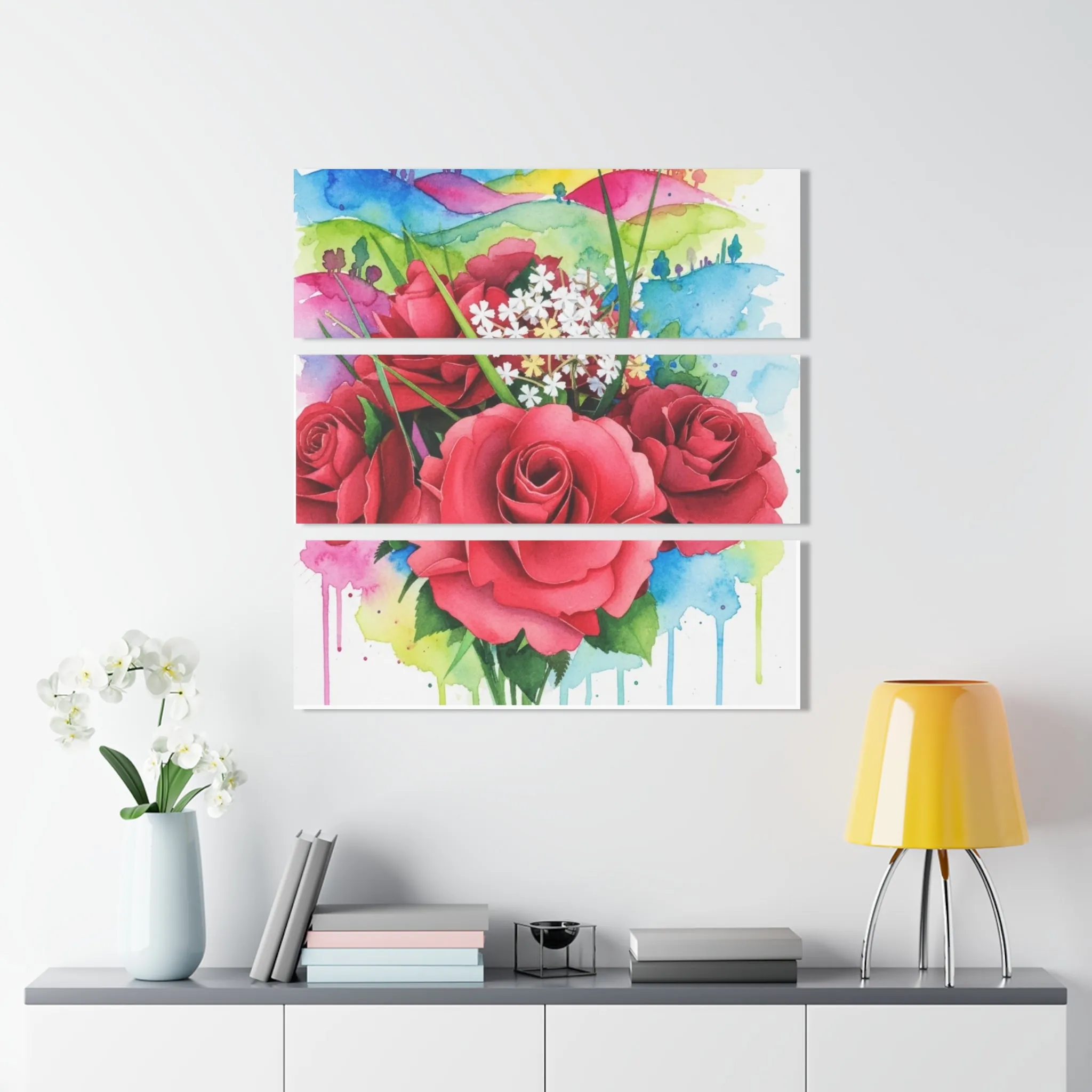
Horizontal pieces are often useful above wide seating because their shape follows the furniture. A pair of related florals can create the same effect, while a triptych adds width with small pauses between panels. Those breaks help the composition feel lighter than one large solid field of color. For a deep sectional, also look at the art from the chaise or side seat. The piece should read clearly from the views people actually use, not only from straight on.
A smaller wall near a chair, cabinet, or doorway can take a taller floral print. There, a vertical composition gives the room a little lift. The goal is not to fill every blank surface. It is to match the shape of the art to the furniture and sightlines that give the room its structure.
3. Let the sofa and rug set the color direction
Floral art does not need to repeat the exact colors in a sofa or rug. Exact matching can make the room feel more staged than personal. A better approach is to find one or two colors the artwork can acknowledge, then let the flowers introduce a little contrast. Soft green leaves may connect to a plant, a muted blush may answer a pillow, or a warm cream ground may relate to wood, linen, and natural fiber.
When the room is neutral, floral art has permission to carry more energy. A deep rose, red peony, or bright vase can become the color note that gives the space a point of view. In a room with a patterned rug or several strong colors, look for a looser watercolor, a quieter palette, or more open space around the flowers. The piece can still be expressive, but it does not have to compete with every other element.
Pay attention to temperature too. Warm woods, camel upholstery, and cream walls tend to welcome coral, ruby, olive, and softened pink. Gray, black, and cooler whites can make blue-toned flowers, crisp greens, or stronger graphic framing feel especially clean. These are starting points, not rules. The more useful question is whether the artwork makes the colors already in the room feel more deliberate.

4. Choose visual weight, not only size
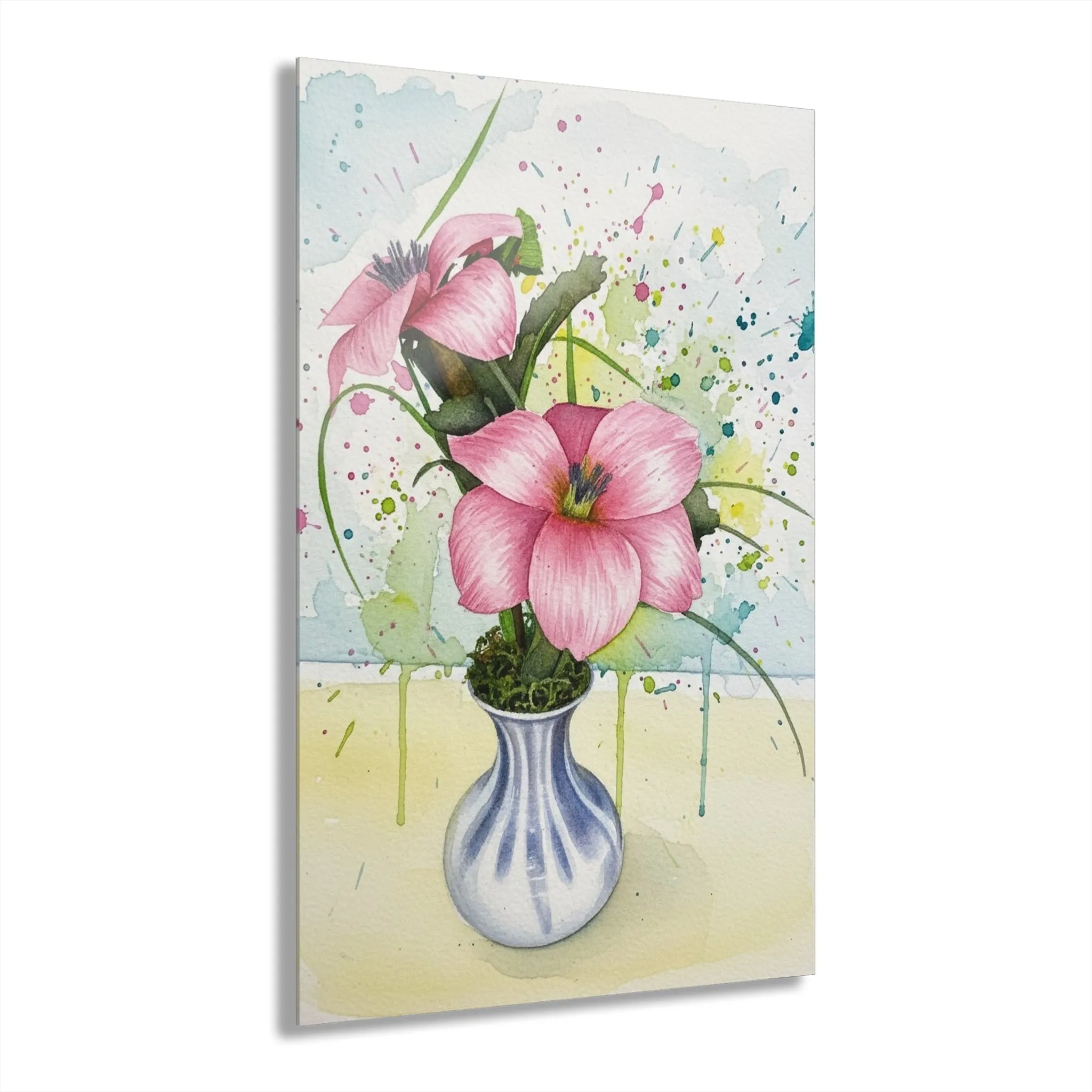
Two pieces with the same measurements can feel completely different on a wall. A close-up bloom, dark background, dense bouquet, or glossy surface carries more visual weight. An open wash of watercolor, delicate stems, and pale background space often feels lighter. That difference matters in a living room because the art sits beside other large shapes: a sofa, television, fireplace, bookcase, or window.
If the room already has a lot of detail, choose floral art with a strong shape but some quiet around it. The eye gets a clear place to land without another busy layer. If the room is spare, a denser or more saturated piece can give it the warmth that makes it feel lived in. A bold floral is often most successful when the rest of the wall is allowed to stay simple.
Look at the image from across the room as well as close up. From the doorway, the composition should read as an inviting shape and color relationship. From the sofa, smaller petals, brushwork, and layered detail can become part of the reward. Art that works at both distances gives the room presence without feeling flat.
5. Think about the room after sunset
Living rooms are not seen in one kind of light. Daylight may bring out a pale background and soft watercolor edges, while lamps in the evening deepen reds, greens, and shadows. Before choosing a floral piece, notice when the room gets its most use. If it is a bright daytime room, consider whether the art needs enough color to remain present beside the windows. If it is mainly an evening room, think about how the piece will look under warm lamps.
Finish matters here. Canvas has a tactile, relaxed presence that can sit easily with textured upholstery and wood. Acrylic or metal can give color a sharper, brighter effect, which works well when the wall needs a more polished point of light. A framed print brings structure and can help a loose floral composition feel tailored beside more formal furniture.
Take a photo of the wall once in the morning and once after dark. The two images make it easier to see whether the space needs a lighter print, a richer floral, or a finish with a little more surface energy. It is a small step that can save a beautiful piece from disappearing when the room changes mood.
6. Give the artwork enough quiet around it
Once the art is on the wall, resist the urge to fill every inch around it. Floral compositions already carry movement, color, and detail. A lamp, small plant, or a few low objects on a console can support that moment, but the artwork should not need to fight through a crowded shelf or a pile of unrelated decor. The calm space around it is part of what makes the piece feel special.
Center the artwork with the sofa or console beneath it, even when the furniture is not centered on the full wall. People read the furniture first, so that relationship is what keeps the room grounded. If the sofa sits toward one side because of a doorway or window, follow the sofa's center line. Trying to force the art to the architectural center can make the seating area feel oddly detached.
For a more collected look, build outward from one floral anchor with a small plant, a book stack, or a companion print on an adjacent wall. For a cleaner, more modern room, let one large piece have the wall to itself. Both approaches work when the art has a clear role and enough space to do it.
7. Use a short final check before you decide
When you have narrowed the options, bring the decision back to three things: scale, color, and feeling. Does the piece relate to the sofa, console, or wall zone where it will live? Does it connect to at least one color in the room while adding something of its own? And does it make you want to spend time in the room, not only admire a product image?
Think about who uses the space too. A living room that hosts friends may benefit from a bolder focal point that gives people something to notice and talk about. A room used for reading, resting, or family movie nights may call for a softer floral with open space and gentler color. The correct answer is not the most dramatic piece. It is the one that matches the life the room already supports.
If you are choosing for a newly furnished room, give yourself permission to start with art. A floral piece can establish the color direction, then help you choose the smaller accents later. It is often easier to find a pillow or throw that supports a favorite artwork than to keep searching for art that matches every temporary detail.
How Artisan's Studios can help you choose floral art for the living room
Artisan's Studios offers floral wall art with a handmade point of view, from calm watercolor compositions to fuller blooms with more color and presence. The wall art collection makes it easy to compare canvas, acrylic, metal, and print formats while looking for the piece that suits your seating area and light.
For a broad wall or sofa, browse the floral canvas wall art collection. For a piece that catches light in an entry or darker corner, the floral metal wall art collection is a useful place to start. You can also use the large flower wall art guide when the room needs a stronger focal point, or contact the studio with room dimensions and a photo for a more personal second opinion.
Frequently asked questions
What size floral wall art works best above a living room sofa?
Start with the width of the sofa, not the empty wall. The artwork should make the seating area feel connected and leave visible space at each end. A wider print, pair, or triptych often gives a long sofa the presence it needs.
Should living room floral art match the sofa or rug?
It does not need to match exactly. Repeating one existing color, such as a muted green, blush, rust, or warm neutral, is usually enough to make the art feel at home. Let the remaining colors bring a little life to the room.
Can floral wall art work in a modern living room?
Yes. Choose a composition with clear shapes, enough open space, and a presentation that suits the room. A crisp acrylic piece, a simple canvas, or a restrained floral palette can make botanical art feel current without making the room feel overly sweet.
Where else can I use floral art in a living room?
Floral art can work above a console, beside a reading chair, on the wall facing the sofa, or in the transition into a dining area. Choose the wall that needs a focal point or a softer visual pause, then let the piece relate to the furniture nearby.
Related posts

Related reading
Floral Wall Art for a Bedroom: A Calmer Way to Choose
Choose floral wall art for a bedroom that feels restful, personal, and in balance with the bed and light.
Related reading
Large Flower Wall Art: How to Choose the Right Size
Choose large flower wall art that gives your room a focal point without overwhelming the space.
Related reading
How to Create a Floral Gallery Wall That Feels Collected
Build a floral gallery wall with an easy layout, a clear visual thread, and art that feels personal.
Related reading