

Floral wall decor does not need to mean a room full of tiny flowers and matching accessories. The best version gives a blank wall a clear purpose. It might soften a clean-lined living room, bring a little color to an entry, or make a bedroom feel more personal without asking the rest of the room to become romantic or busy.
The useful starting point is not the flower. It is the view. Look at the wall from the doorway, from the sofa, or from the bed. Decide whether the wall needs one strong focal point, a quieter layer of color, or a small moment that makes a neglected corner feel complete. These floral wall decor ideas begin there, then help you choose art, scale, and supporting details that hold together in a real home.
1. Let one floral artwork do the heavy lifting
The simplest way to change a blank wall is often one generous floral piece. Above a sofa, bed, sideboard, or dining table, a single artwork gives the eye a destination. It also keeps the room from collecting small objects simply because the wall felt empty. Floral imagery already has movement in its petals, stems, and color, so it rarely needs much help.
Choose the size from the furniture below, not from the full expanse of wall. Center the art over the sofa, headboard, or console, then leave clear space at the sides. That relationship makes the arrangement feel anchored. When a piece is too small, people often try to fix the problem by adding more frames. A larger artwork is usually the cleaner answer.
A bold bouquet works especially well when the room itself is quiet. Let the art supply the gesture, while the rug, upholstery, and lighting stay simpler. A floral focal point can be colorful without becoming cluttered when there is enough calm material around it.

2. Build a pair when the wall wants balance
Some walls ask for symmetry. A pair of related floral artworks can give a bed wall, dining-room sideboard, or wide entry a sense of order without looking stiff. The trick is to let the works relate in palette, flower type, or finish, then give them enough breathing room to read as two distinct moments.
Pairs are useful when one large horizontal piece would feel too dense. Two vertical works can add height beside a headboard. Two square or similarly sized pieces can make a long low console feel grounded. Keep the hanging height consistent and treat the gap between the works as part of the composition, not leftover space.
Do not force symmetry into every room. It works best when the furniture, windows, or architecture already suggest a centerline. If the wall is interrupted by a lamp, a doorway, or an off-center chair, a single work or a more relaxed gallery arrangement may feel more natural.
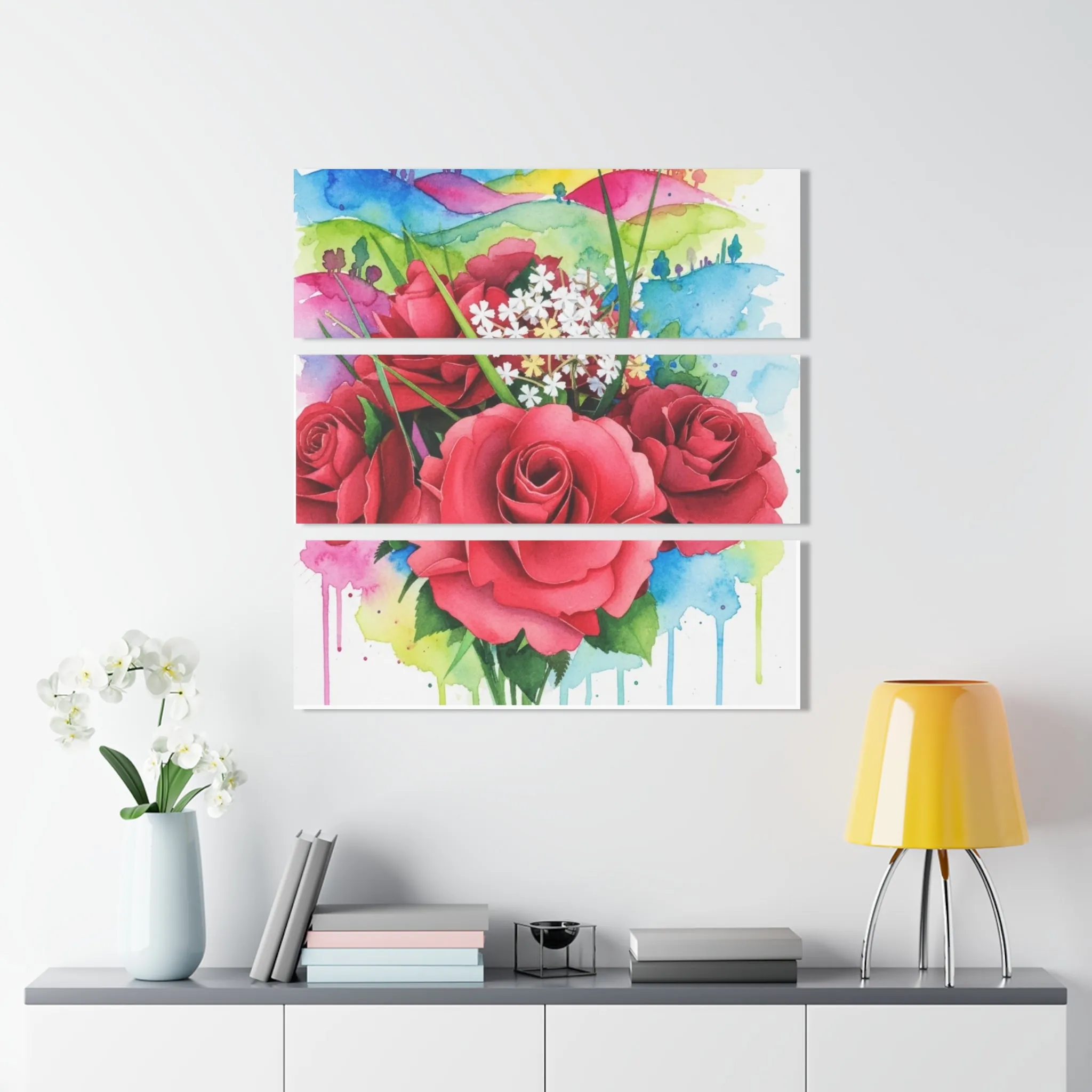
3. Use a gallery wall with one clear thread
A floral gallery wall works when it feels collected, not when every frame competes for attention. Start with one anchor, usually the largest or most colorful piece. Add two to five supporting works that share something visible: a warm background, deep green leaves, a similar level of detail, or a common frame finish. The anchor gives the eye a first stop, and the related pieces make the grouping feel intentional.
Before you hang anything, lay the arrangement out on the floor or mark the overall footprint on the wall with painter’s tape. Stand back at the same distance you will use when entering the room. That view reveals whether the group needs more width, more height, or simply more space between the frames. The studio’s guide to a floral gallery wall walks through anchor placement and an easy way to test the layout.
Keep the surrounding wall quieter than the art. A gallery wall looks strongest when it has a boundary, even if that boundary is only open wall space. If you enjoy a layered, collected look, use the artwork to carry it and resist placing shelves, signs, and other unrelated objects directly beside the group.
Frame choice can either pull the collection together or make it feel accidental. Matching frames give different floral subjects a clean, modern rhythm. A shared material, such as natural oak or a soft black finish, is enough to create order even when the images are not identical. If you prefer mixed frames, repeat one other element more deliberately, such as a narrow white mat, a common background color, or a small family of related greens and pinks.
Leave the arrangement some room to evolve. A good gallery wall has a clear shape before every blank spot is filled. That restraint matters because floral art has natural detail already. When the overall silhouette is easy to read from a few steps back, the individual petals, leaves, and brushwork can be discovered later, instead of having to compete for attention on the first glance.
4. Use darker florals for a more graphic room
Floral decor can be dramatic as well as soft. Deep roses, black backgrounds, dark leaves, and saturated petals give a room contrast and structure. They are a good choice for a dining area, an entry, a study, or a living room that already has dark wood, charcoal upholstery, or a richer paint color.
The key is to give the work contrast. On a pale wall, a dark floral can feel like a crisp punctuation mark. On a darker wall, choose a piece with enough light petal color or background space to remain visible from across the room. Repeat one quiet note from the art, perhaps a brass lamp, a berry-toned book spine, or a deep green plant, rather than scattering several matching accents around the room.
Dark florals also make an easy bridge between traditional and modern pieces. The flowers add organic movement, while the high contrast keeps the look from becoming overly sweet. If you want color with a little more drama, this is often a more confident direction than adding many small bright accessories.
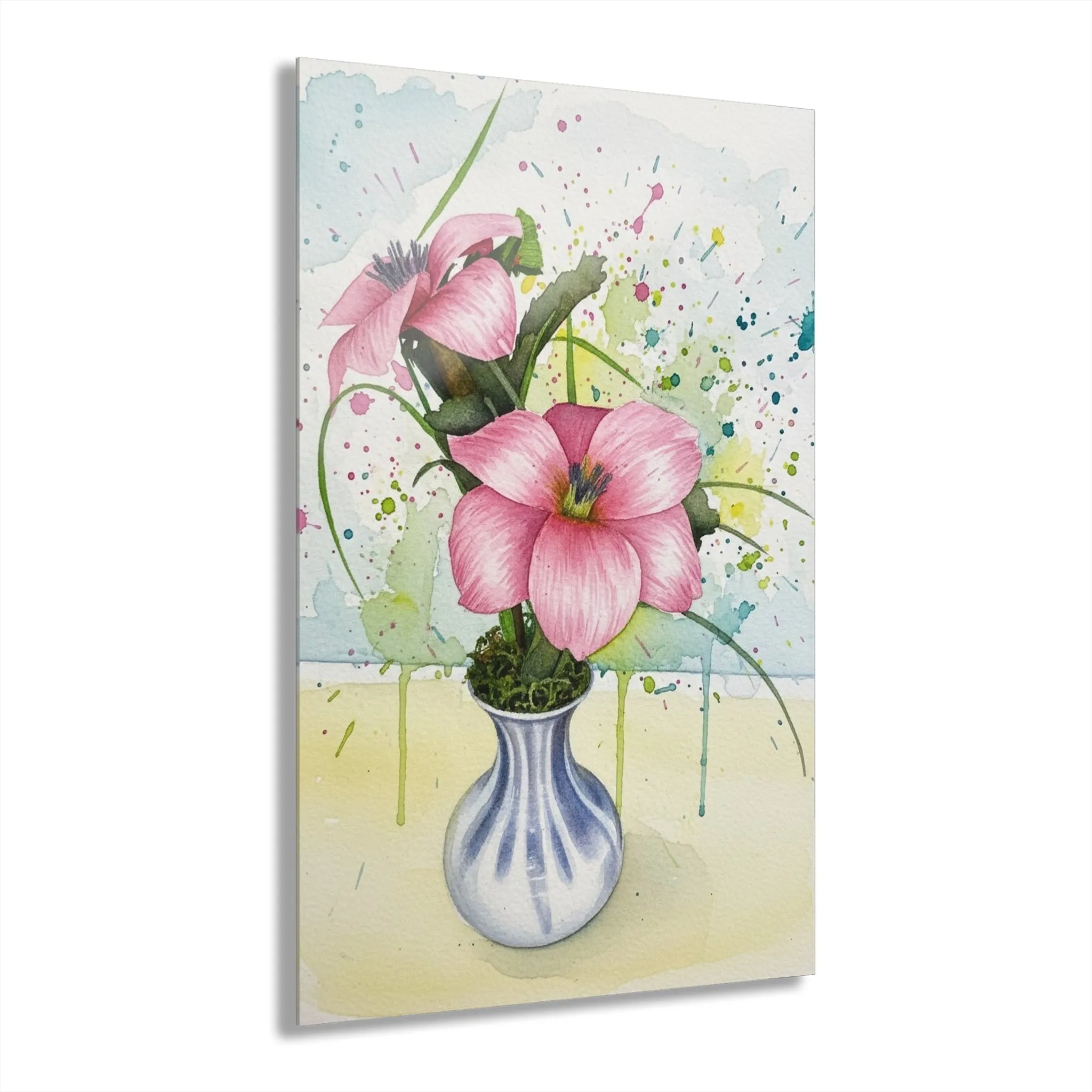
5. Give a narrow wall one vertical moment
Small walls do not need small ideas. A vertical floral artwork can make the space between windows, beside a door, at the end of a hall, or above a compact desk feel considered. These are often the places where a room benefits from color most, because the work is seen in passing and does not need to compete with a large piece of furniture.
Choose a composition with a clear silhouette, such as a vase, a stem, or a single bloom. A busy all-over pattern can feel compressed in a narrow space. A more focused floral image gives the wall shape and helps the eye travel upward, which can make a low ceiling or tight corner feel more generous.
Use the same rule for height that you would use elsewhere: judge from the normal viewing position, not from directly beneath the work. The art should feel connected to the nearby furniture or architectural feature, not float too high simply because the wall is tall.

6. Let the room choose the floral mood
Floral wall decor can be airy, formal, playful, moody, or quietly natural. The composition tells you more than the flower name alone. Open background space and loose watercolor marks feel lighter. A dense crop of petals feels more expressive. A vase or botanical arrangement brings order. A large close-up bloom has more presence from a distance.
In a bedroom, look for a mood that supports rest. Softer color, gentler contrast, and room around the blooms can help the wall feel calm rather than overly decorated. For a living room, you can usually take more visual weight because the room is seen from farther away and used for gathering. The studio’s bedroom guide and living-room guide make that room-by-room choice easier.
It is also fine to choose the artwork first and let the room learn from it. Pull one subdued color or texture from the work into a pillow, a ceramic object, or the wood tone nearby. You do not need a coordinated set. You need a few details that make the art feel like it belongs.
Notice the energy of the flower, too. A loose, garden-like bouquet has a softer rhythm than a close-up bloom with strong edges. A formal rose composition can feel polished beside tailored furniture, while a daisy or anemone may bring a more relaxed note to a casual room. There is no correct flower for a style, but choosing an image whose energy matches the room is more dependable than choosing only by color.
7. Test the idea before making it permanent
A little testing saves a lot of second-guessing. Mark the artwork’s overall width and height with painter’s tape before you buy or hang it. If the work is already at home, lean it against the wall for a day. Look at it from the doorway in morning light, then again in the evening with lamps on. The goal is not to create a perfect showroom. It is to see whether the color and scale work from the view you actually live with.
Photograph the wall from across the room, too. A quick photo makes it easier to spot a piece that is hanging too high, a grouping that is too narrow, or a color that is getting lost against the paint. For renters, the same testing habit is useful before choosing lighter-weight or removable options. A renter-friendly floral wall decor guide also recommends choosing the room’s style and layout first, then building the floral idea around that reality.
Once the arrangement works from the everyday viewpoint, stop. Floral wall decor gets its strength from having a clear role in the room. A little empty wall around the art is not unfinished. It is what gives the flowers room to matter.
Find a floral idea that feels like your home
The best floral wall decor idea is the one that fits the way the room is actually used. Use one large work when the wall needs a focal point, a related pair when the room wants balance, a gallery when you have a real collection to connect, or a vertical floral for a smaller in-between space. Then let scale, contrast, and a little open wall do their work.
Artisan’s Studios creates floral wall art in canvas, acrylic, and metal, with designs that range from quiet watercolor bouquets to bolder roses and statement blooms. Browse the full wall art collection, explore floral canvas wall art, or use the pink floral collection when you want a warmer color direction.
Frequently asked questions
How do I choose floral wall decor for a living room?
Start with the wall’s job. Above a sofa, choose one substantial piece or a coordinated pair that relates to the sofa’s width. Then use one color from the art in a small nearby detail, such as a pillow, book cover, or vase. The goal is a focal point, not a perfectly matched set.
Can floral wall decor look modern?
Yes. A modern floral wall usually relies on a clear composition, enough empty wall around the work, and a limited palette. Large blooms, dark backgrounds, open negative space, or a crisp acrylic or metal finish can make floral imagery feel graphic and current.
Should floral wall art match the room’s colors exactly?
No. Exact matching often makes a room feel flat. It is more useful to repeat one undertone, then let wood, fabric, and a few neutral surfaces create contrast around the artwork.
What is the easiest floral wall decor idea for a blank wall?
Use one floral artwork with enough visual weight for the wall, then center it over the furniture below. It is easier to make a single well-sized piece look intentional than to correct a group of small pieces that do not relate to one another.
Related posts

Related reading
How to Create a Floral Gallery Wall That Feels Collected
Build a floral gallery wall with an easy layout, a clear visual thread, and art that feels personal.
Related reading
Floral Wall Art for a Living Room: A Practical Guide
Choose floral wall art for a living room by balancing scale, color, light, and the way people gather there.
Related reading