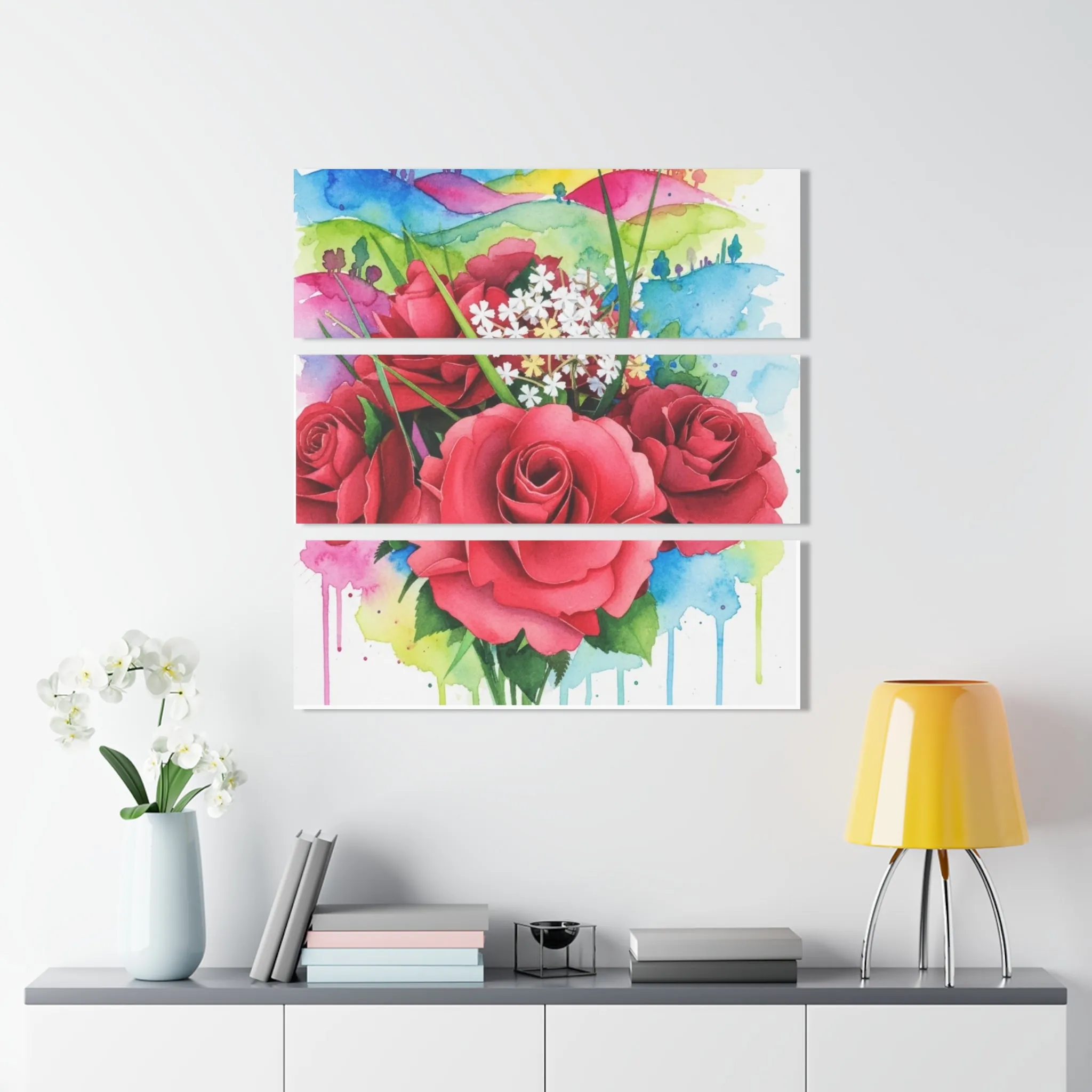
Rose wall art does more than add a flower to an empty wall. A rose has enough shape, color, and familiarity to change the emotional temperature of a room. A ruby bouquet above a sofa can make the living area feel generous and gathered. A softer pink rose beside a bed can make the last view of the day feel more personal. A dark rose against a pale wall can bring the contrast that keeps a neutral room from drifting into the background.
What makes a rose especially useful at home is its range. It can feel romantic without becoming overly sweet, dramatic without making the room feel heavy, or calm without disappearing. The key is choosing the version that works with the mood already taking shape around it. A strong red can hold a dining room or entryway. A pink rose can soften clean-lined furniture and warm pale wood. Black-ground or blue-toned roses can give a more contemporary space an unexpected, collected layer.
At Artisan’s Studios, floral artwork begins with close attention to the character of a bloom, then becomes expressive art made for the rooms people actually use. That point of view shows up in the movement of the petals, the shifts of color, and the way each piece can become more interesting as you live with it. This is art for the wall you pass every morning, the room where people gather, or the corner that needs one meaningful thing instead of more stuff.
Begin with the view you use most. Stand in the doorway, sit on the sofa, or look from the foot of the bed. Notice whether the room needs a strong focal point, a softer layer of color, or a little contrast. The rose that feels right from that everyday perspective is more likely to keep feeling right after the room changes around it.
Choose the mood first
Find the rose that belongs in your space.
Choose red for warmth and presence.
Ruby and crimson roses are made for the wall that needs a clear center. They sit beautifully with warm wood, cream upholstery, brass, charcoal, black, and deep green. A red rose piece can carry a broad wall above a sofa or dining table while still feeling personal enough for a bedroom or entry.
Use pink when the room needs a softer note.
Pink roses bring warmth without asking the rest of the room to match. They work with linen, pale wood, clay, soft neutrals, and darker accents that give the color a little structure. Choose a pink rose when you want the art to feel welcoming, romantic, or quietly expressive.
Let deeper or cooler tones add contrast.
Black-ground roses and blue-toned blooms create a more unexpected point of view. They can sharpen a light room, echo black metal or navy upholstery, and make a small wall feel intentional. These pieces are a good fit when you want floral art with more edge than a traditional bouquet.
Available rose artwork
Choose the rose that makes the wall feel finished.
Start with the furniture, then let the rose set the mood.
The wall above a sofa, bed, sideboard, or table already has a job to do. It helps the furniture feel anchored rather than scattered. Rose wall art can make that job easier because the flower has a strong silhouette from across the room, then keeps offering smaller details up close. A triptych or wider piece can settle a generous wall. One compact rose can make a narrow entry, reading corner, or space between windows feel considered.
Look at visual weight as carefully as size. A full bouquet, saturated red, dark background, or glossy acrylic surface will read as more present from the doorway. A lighter composition with more open space can keep the same wall feeling calm. Neither choice is better. The useful question is whether you want the artwork to lead the room or simply make it feel more complete.
Finish changes the feeling as much as color. Canvas has a softer, more relaxed character that can make floral art feel at home with texture and natural materials. Acrylic gives the petals a crisp, luminous surface that suits rooms with cleaner lines or a more dramatic focal point. Metal is slim and matte, which makes it especially useful for smaller walls and spaces with bright light where you want a clean profile.
Use color to connect the room, then let the rose add something new.
A rose piece does not have to repeat every color already in the room. In fact, exact matching can make the result feel a little too planned. Look for one or two natural connections instead. A red rose may answer the warmth in a wood table or a rust-toned pillow. Pink can pick up the softness of linen or a clay vase. A black-ground piece can relate to a lamp, frame, or metal detail. Those small echoes help the artwork belong without turning the room into a color exercise.
Scale is part of that decision. Above substantial furniture, choose art with enough width or visual energy to hold its place. Leave some wall visible at the sides so the composition can breathe. On a smaller wall, one well-chosen metal or canvas piece often feels more confident than several small decorations competing for attention. A rose has plenty of presence on its own, especially when the surrounding area stays simple.
Light deserves a look, too. Morning sun can make pink and red petals feel fresh and immediate. Evening lamps can deepen ruby tones and bring more glow to an acrylic surface. Look at the intended wall at the time you use the room most, not only when it is at its brightest. That familiar view will tell you more about the piece you will enjoy every day.
For a gift, start with the feeling rather than a precise color. Red roses can feel romantic and celebratory. Pink roses feel warm and welcoming. A darker or blue-toned bouquet can suit someone who likes a more unusual floral note. A compact piece is a thoughtful choice for a housewarming, birthday, anniversary, or holiday because it gives someone a finished artwork they can make part of their own home.
A simple way to decide
Three questions before you choose rose wall art.
01
What should the wall do?
Choose a fuller bouquet or stronger contrast when the room needs a focal point. Choose a smaller piece or lighter composition when the wall needs a thoughtful finishing touch.
02
Which color already has a place in the room?
Look for a natural connection in wood, fabric, a rug, a lamp, or another artwork, then let the rose introduce its own fresh color and movement.
03
Where will you see it most?
Trust the view from the doorway, sofa, bed, or table. That everyday perspective tells you whether the scale and mood feel settled.
Frequently asked questions
Choosing rose wall art.
Where does rose wall art look best?
Rose wall art can give a living room, bedroom, dining area, entryway, or reading corner a clear emotional center. Start with the wall you see most often, then choose a piece with the scale and color that suits the furniture beneath it.
How do I choose between red, pink, black, or blue roses?
Red roses bring warmth and confidence, while pink roses feel softer and more romantic. Black-ground roses create deeper contrast, and blue-toned roses can make a room feel cooler and more unexpected. Choose the feeling you want the room to carry, then look for a color already echoed in the space.
Is acrylic, canvas, or metal best for rose artwork?
Acrylic gives a rose piece a luminous, polished surface that suits a strong focal point. Canvas feels warmer and more relaxed. Metal keeps the profile slim and works well for smaller walls, brighter rooms, or a clean contemporary look.
Can rose wall art make a thoughtful gift?
Yes. A rose artwork is a personal choice for a housewarming, anniversary, birthday, or holiday. When wall size is uncertain, a compact metal piece or smaller canvas is an easy way to give someone art they can make their own.
Ready to bring a rose home?
Browse the collection, then choose the piece that gives your wall a more personal point of view.