Large floral wall art does more than fill an empty wall. It gives the room a center. Above a sofa, it can pull the seating area together. Over a dining table, it can bring color and conversation without adding more objects to the surface. In a bedroom, it can turn the wall above a bed or dresser into a softer, more personal view.
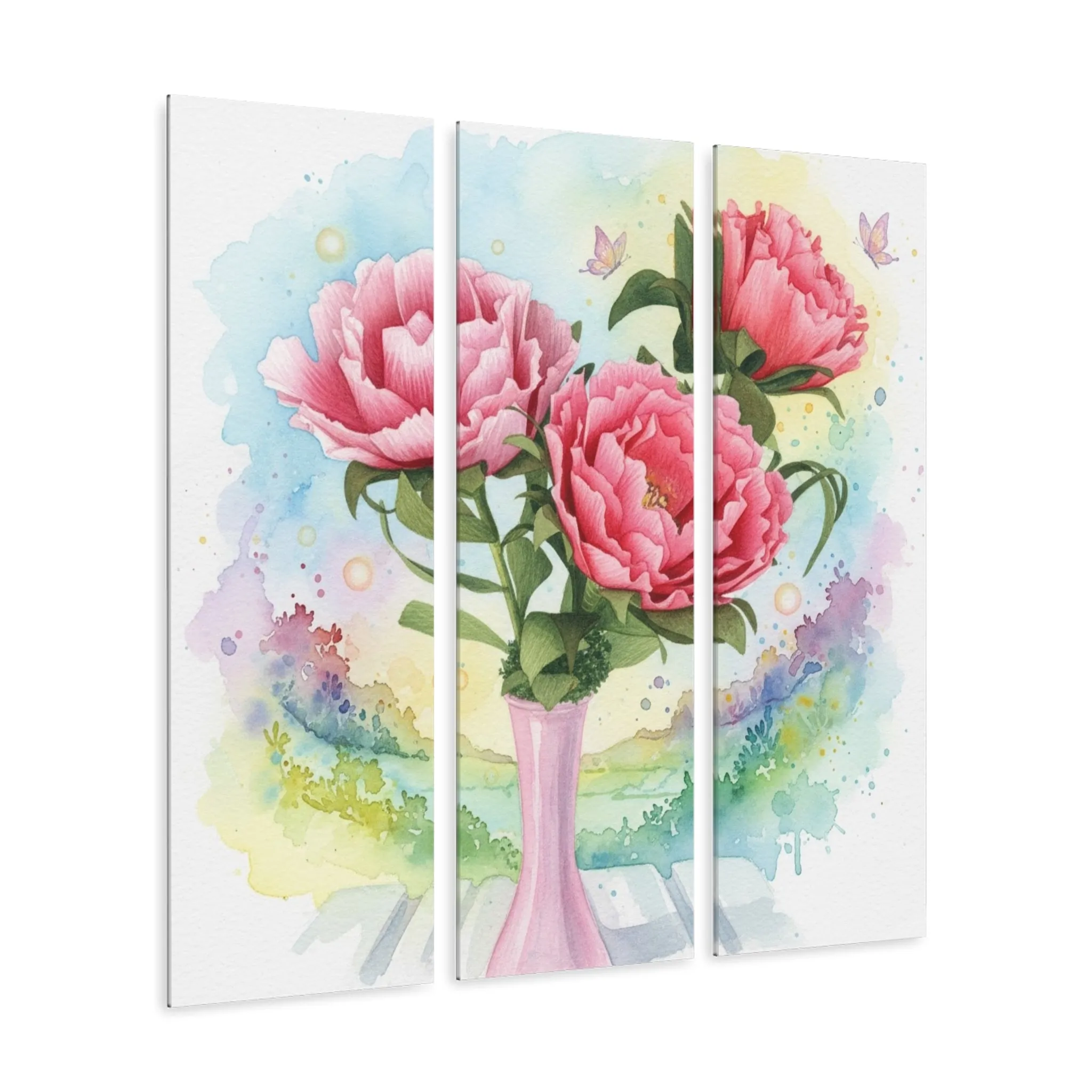
The right statement piece does not need to cover every inch. It needs enough scale to feel connected to the furniture, the light, and the way you move through the room. A wide triptych can carry a generous wall while keeping some air between its panels. A large floral canvas can give a neutral room warmth and movement. A luminous acrylic bouquet can bring more definition to a space with clean lines and simple materials.
At Artisan’s Studios, Tim McGinley’s floral work begins with close attention to the shape and character of a bloom. That handmade point of view carries through to watercolor-inspired artwork made for everyday rooms. The result is floral art with enough presence to lead a space, while still feeling easy to live with.
Choose the focal point
Start with what the wall needs to hold.
Anchor the furniture, not the whole wall.
Start with the sofa, bed, sideboard, or table beneath the art. Those pieces create the visual base for the room, so the floral work should feel related to their width and position. Leaving space at the sides helps a larger piece feel intentional instead of pressed into the architecture.
Choose visual weight as carefully as size.
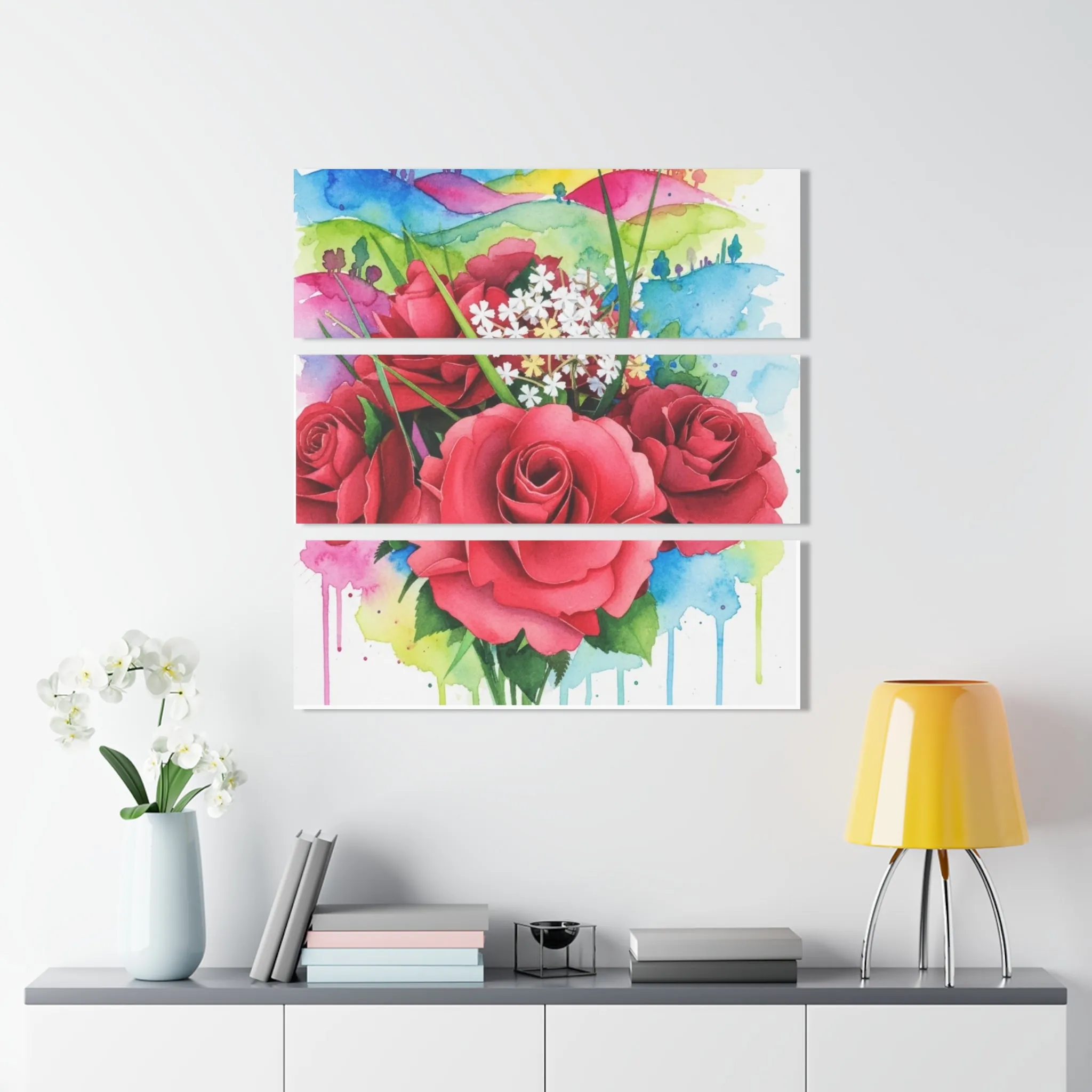
A full bouquet, saturated reds, dark contrast, or a bright acrylic surface can make artwork feel especially present. Softer petals, open background space, and a lighter palette can let a generous piece stay calm. Think about whether the room needs a strong arrival or a quieter layer of color.
Let the flowers lead one feeling.
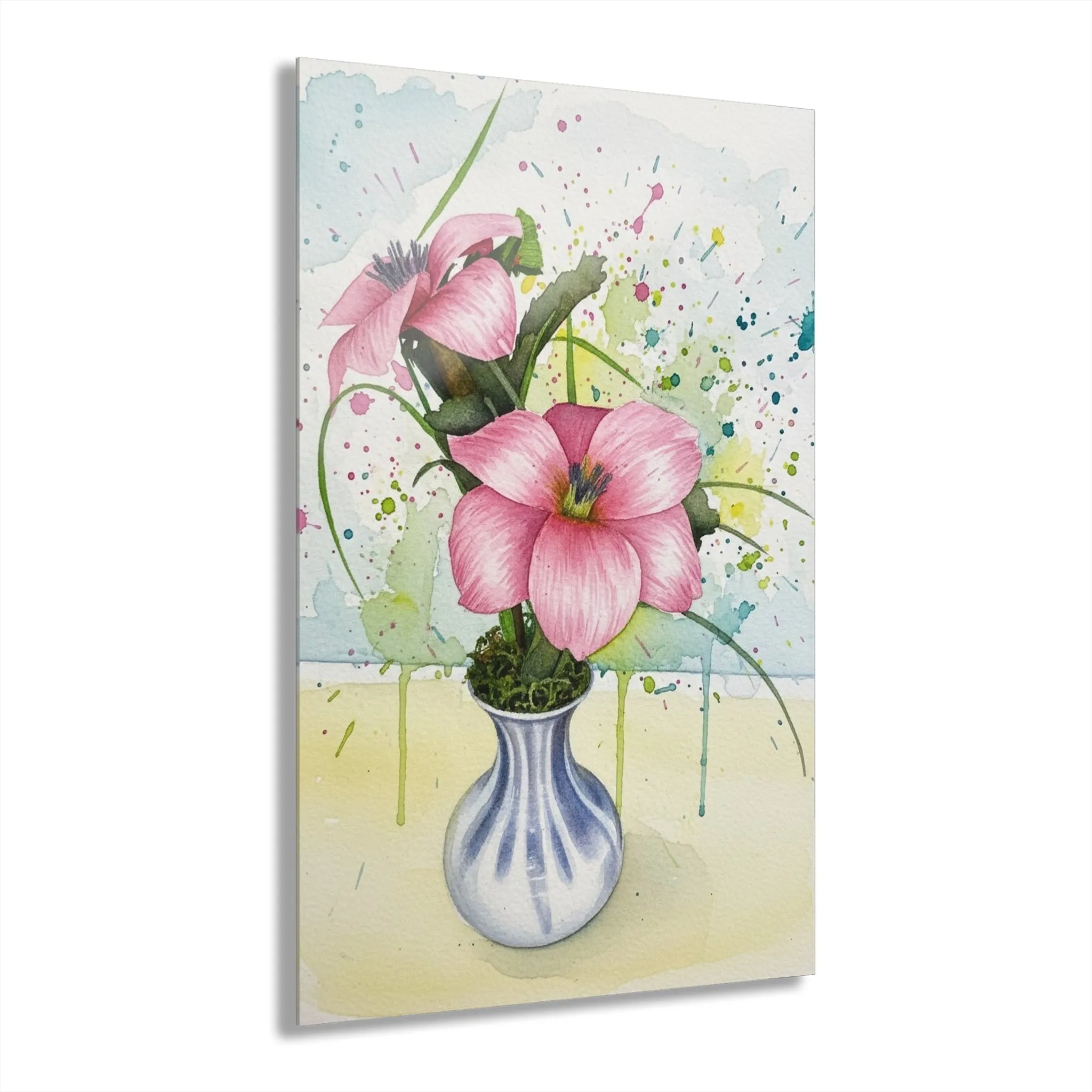
Peonies can make a room feel lush and gathered. Roses can bring romance or drama. A bright vase arrangement can make an entry or dining area feel welcoming. Pick the mood you want to notice when you first walk in, then choose the floral composition that carries it clearly.
Look from the doorway before you look at the details.
A large piece is usually seen from more than one distance. From the doorway, it needs a shape and color that make the room feel complete. From the sofa, dining chair, or bedside, the details begin to matter: the layered petals, the color shifts, and the smaller moments that make the piece feel considered rather than simply decorative.
That is why the first view is a useful place to begin. Stand where you naturally enter the room and notice where your eye lands. A wide wall above a sofa may ask for a larger horizontal arrangement or a triptych. A tall, open wall beside a dining table may be better suited to a vertical bouquet. The best choice is the one that makes the room feel settled from the view you use most.
Light changes the decision too. Morning sun can make soft petals feel fresh and airy. Evening lamps can make deeper reds, corals, and greens feel richer. Look at the wall at the time you actually spend in the room. A floral piece should work with everyday light, not only the brightest moment of the day.
When you are choosing between two directions, notice the other large shapes nearby. A broad sectional, substantial wood table, or tall headboard can support a more expressive floral composition. Slim furniture and open shelving may call for a piece with more space around the flowers. The art should give the room confidence, not make it feel crowded.
Let the art belong
Use color to connect the room, then add something new.
Large floral wall art does not have to match every color already in the room. In fact, exact matching can make a space feel a little too planned. Look for one or two connections instead: the warmth of a wood table, a pink or rust tone in a pillow, the green of a houseplant, or the quiet cream of a rug. Those shared notes help the artwork belong.
Then let the flowers introduce a new note. A deep rose can give a pale room more depth. A peony composition can make a room with simple lines feel more generous. A fresh vase of flowers can bring energy to a corner that has been waiting for something more than another shelf or mirror. That small surprise is what lets the art become a focal point rather than disappearing into the background.
For a long wall, do not be afraid to use one meaningful piece instead of a scattered group of smaller frames. A larger floral work gives the eye one clear place to rest. In a smaller room, that same approach can feel calmer because it removes the visual noise of trying to decorate every open surface.
Once the piece is on the wall, let it breathe. A lamp, plant, or a few objects on a console can support the composition, but the artwork should not have to compete with a crowded arrangement below it. Keeping the surrounding area simple makes the flowers, color, and movement of the piece easier to enjoy every day.
A simple way to decide
Three questions before you choose large floral art.
01
Where is the room’s natural center?
Begin with the wall above the sofa, bed, dining table, or sideboard that already holds the room together.
02
Should the flowers arrive softly or boldly?
Lighter palettes and open compositions create calm. Deeper color and fuller bouquets give the wall more drama.
03
What will you see every day?
Choose from the doorway, chair, or table where you will enjoy the finished wall most often.
Frequently asked questions
Choosing large floral wall art.
What makes floral wall art feel large enough for a room?
The best scale relates to the furniture and the view across the room. Start with the sofa, bed, dining table, or sideboard beneath the wall, then choose a piece or triptych that gives that area a clear focal point while leaving breathing room around it.
Can large floral wall art work in a small room?
Yes. One substantial floral piece can make a small room feel calmer than several smaller decorations. Choose artwork with clear flower shapes and enough open space around the composition, then let it become the room’s main visual note.
Should I choose canvas or acrylic for a larger floral piece?
Canvas gives a room a softer, more relaxed feel. Acrylic has a more luminous, gallery-like surface and can give a statement piece extra presence. Choose the finish that fits the room’s light, other materials, and the feeling you want from the wall.
Can I get help choosing a floral piece for a specific wall?
Yes. Contact the studio with a photo of the wall, the approximate dimensions, and a note about the colors already in the room. Tim can help you narrow the collection to a floral direction that feels at home in the space.
Ready to choose your statement bloom?
Browse the collection, then select the floral piece that gives your room the presence it has been missing.